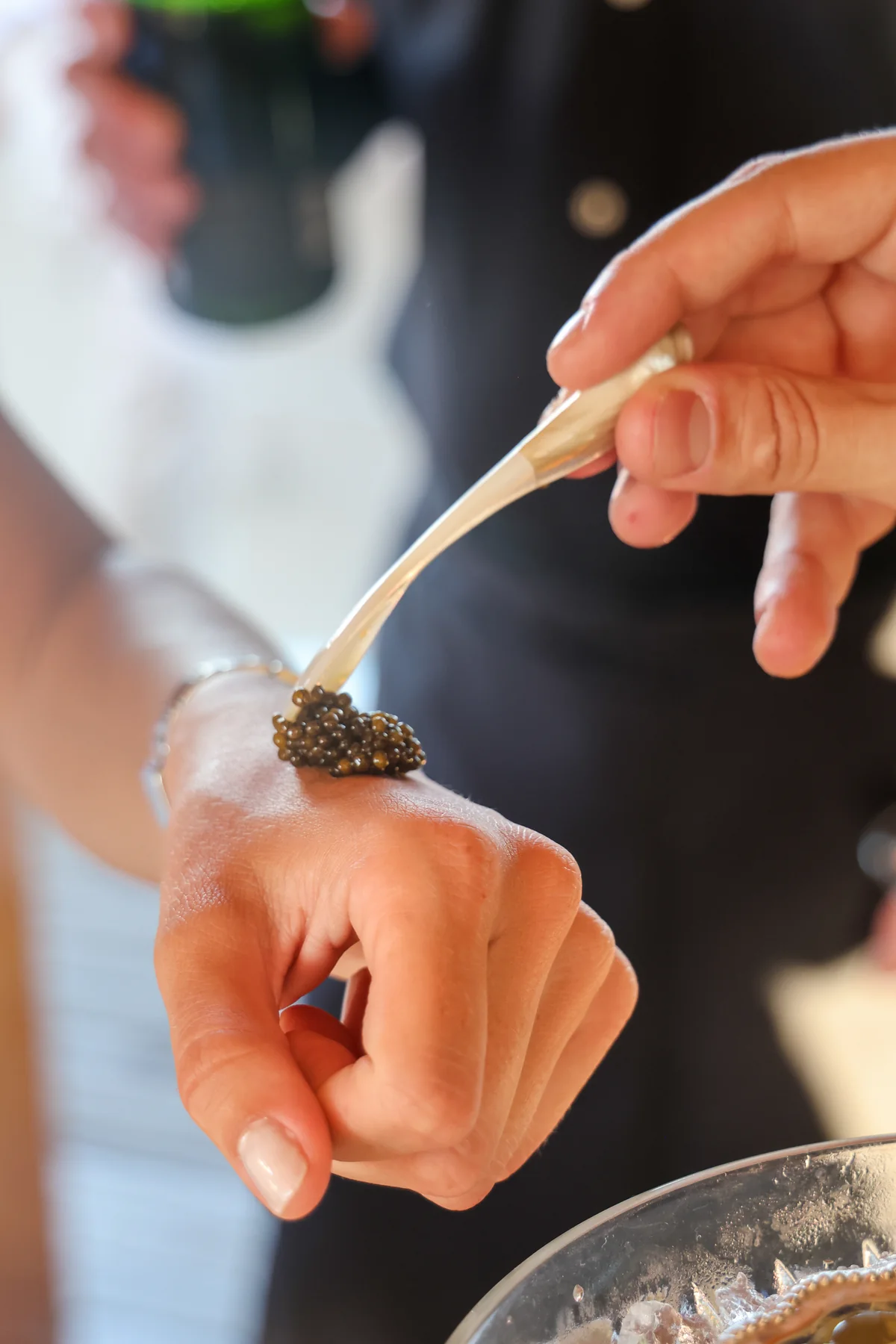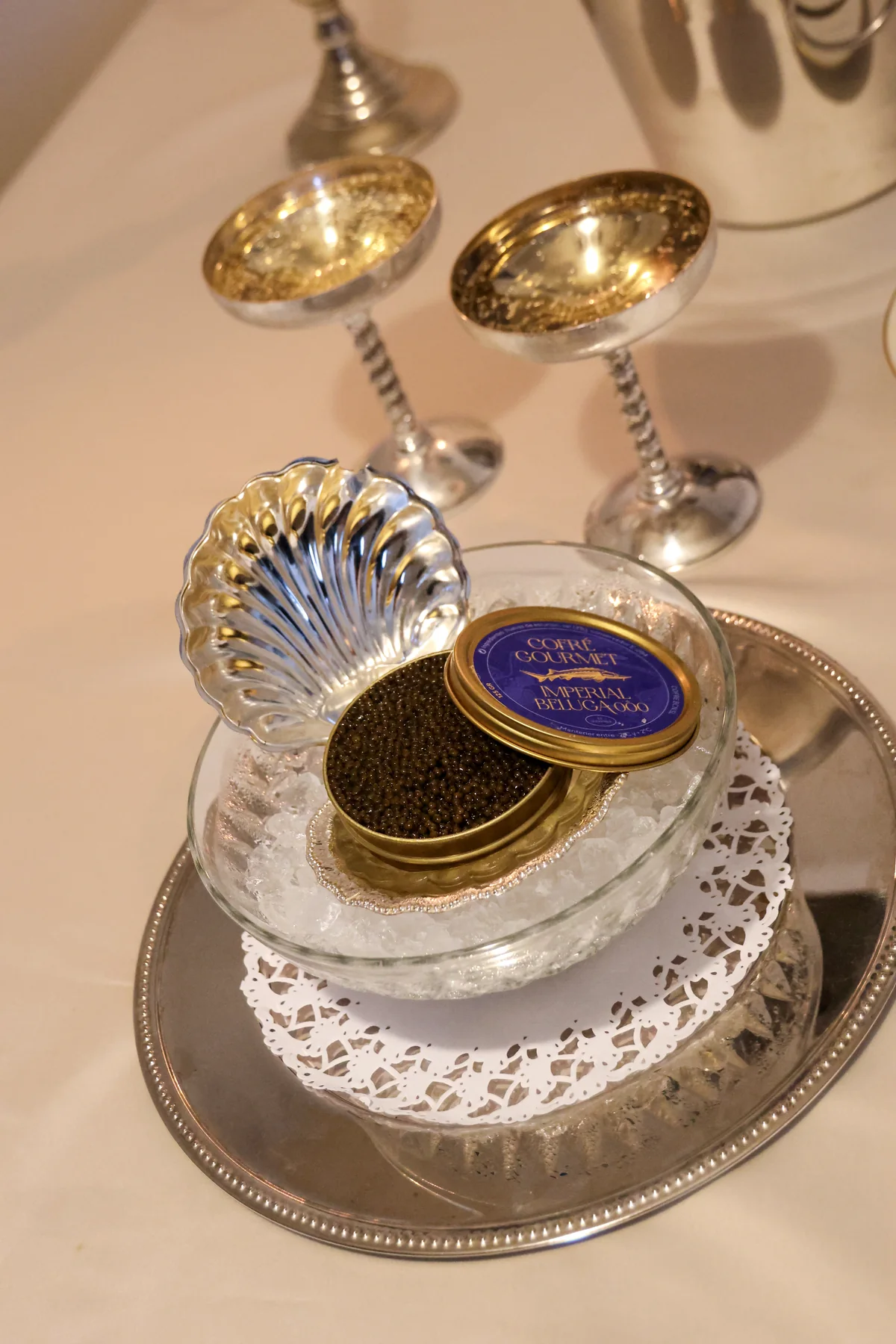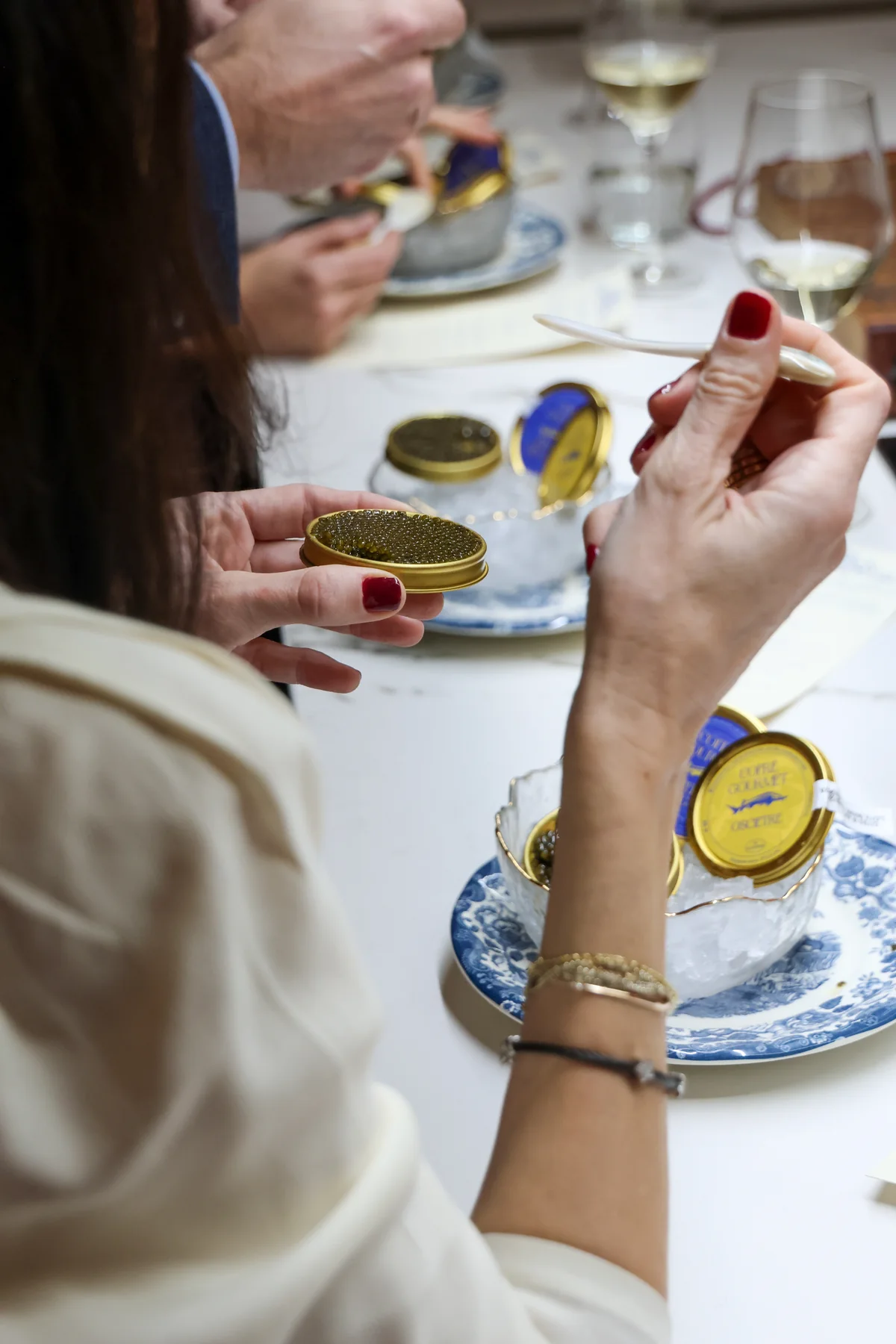
A home tasting works best when everyone begins with the same thing. You need neither a crowded table of ingredients nor an expert's examination. Save a first round for caviar on its own and, if you like, a second for a simple base. The pleasure is hearing how each person experiences the difference.
Calculate the amount before inviting
Decide how many will attend and how many rounds you want to offer. As an example of division, a 50 g tin shared by two gives 25 g each; 125 g shared by five gives the same amount. These are not prescribed servings: use less if other dishes follow or choose another size if caviar is central. To make the comparison fair, offer similar portions in each round.
Plan a two-round sequence
Set out clean spoons, small plates, water and an ice-filled container to support the tin. Prepare any bases beforehand; cooked potato that has lost its intense heat and a mild blini are two restrained options. Keep the tin according to its label until everyone is seated. If you have several tins, there is no need to open them all for visual symmetry.
First round: no accompaniment
Give each guest a small spoonful. Suggest three easy questions: how does the pearl feel before it yields; what flavour appears as it opens; what remains afterwards? Allow a moment of quiet, then hear different answers without correcting them. Caviar does not have to ‘taste luxurious’; it can be described in clear words that each person recognises.
Second round: change one thing
Place the same amount on a neutral base. Change only that element so its effect is easier to understand. Add cream, citrus and herbs all at once, and it becomes harder to know which has transformed the experience. Ask whether the base reveals more texture, softens the saline note or hides the finish. Nobody has to prefer the accompanied version.
Keep the tin cold during service and use a clean spoon that has not touched the bases. If the conversation runs long, do not leave the caviar out for convenience: follow the storage conditions on its package. After the tasting, read the opened-tin instructions and act accordingly.
End with a choice, not a score
Ask each person which bite they would choose again. It may be the first, on its own, or a spoonful over potato. That simple decision is worth more than a sheet of scores. Next time, vary just one thing — the base, the order or the number of friends — and see why no two caviar tables are quite alike.