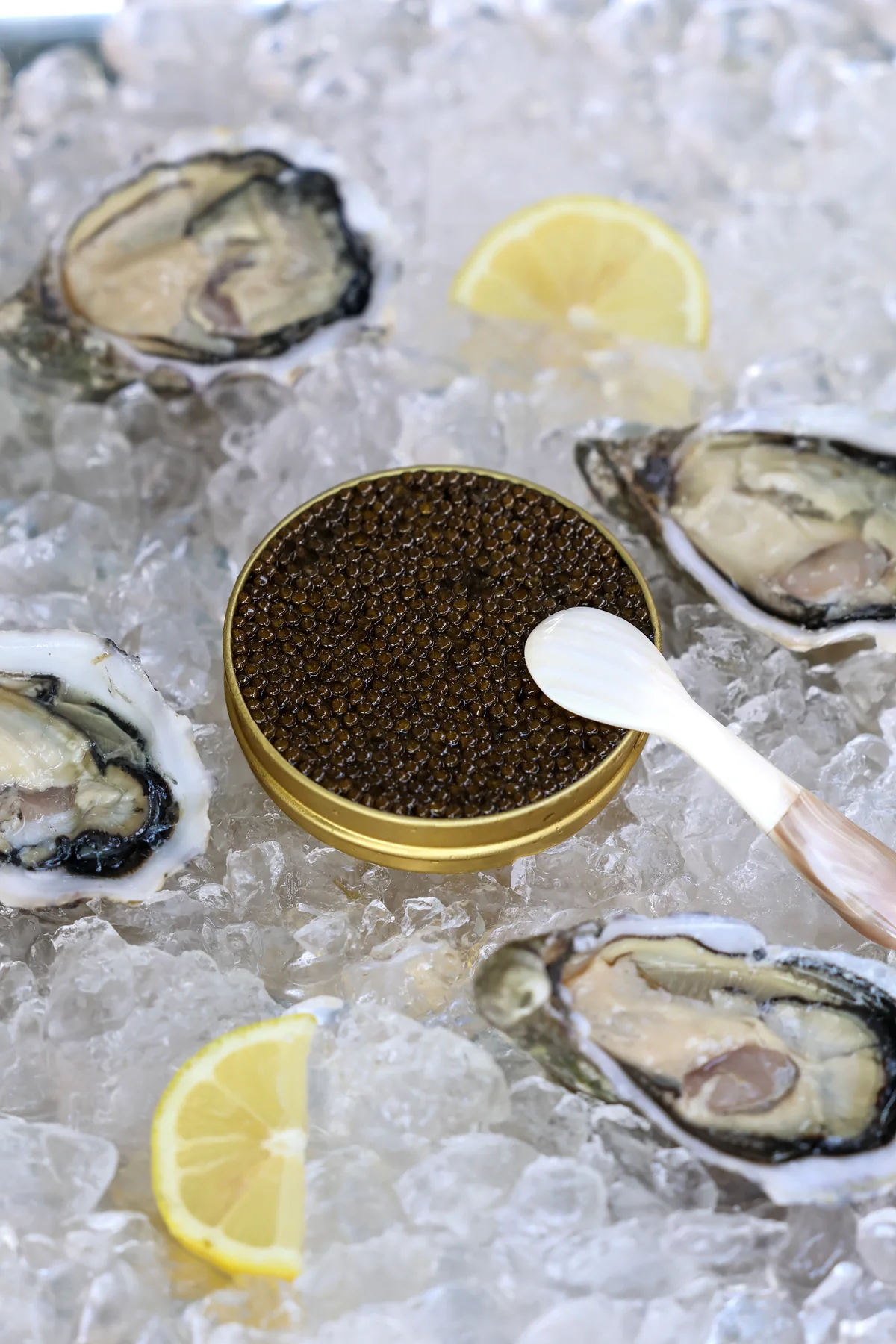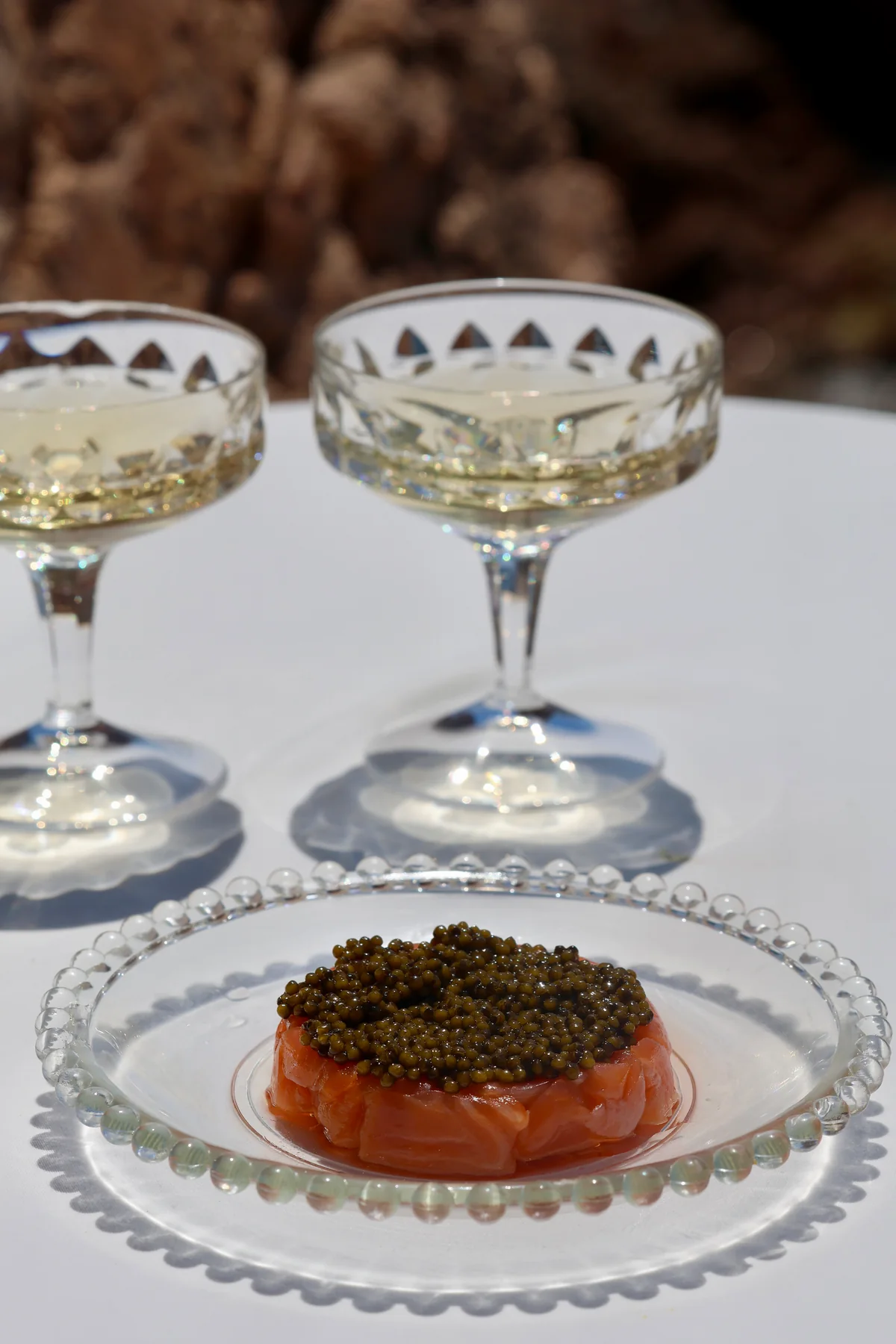
Opening two tins at once gives you a useful opportunity: find out what you prefer before seeing the price or favouring the larger pearls. A worthwhile comparison is not about naming an absolute winner. It is a way to describe differences in texture, intensity and finish under conditions similar enough to give both caviars a fair hearing.
Make the conditions comparable
Check the information and instructions on both tins first. Identify their species, provenance and storage requirements without combining them in one container. Keep both products cold and prepare two clean spoons, water and similar-sized portions. Do not compare one sample just taken from the refrigerator with another that has spent too long on the table; then you are also comparing the way they were served.
For a group, mark the samples A and B. The person serving them can keep the key until the end. Avoid announcing brand, weight or price before people share their impressions. This is not a laboratory experiment, but removing those visual clues makes it easier to attend to the caviar itself.
Try two short rounds
Taste A on its own and note three things: the pearl's resistance, the initial flavour and what remains afterwards. Drink some water, pause, then do the same with B. Reverse the order for a second, small round. Order matters because the first spoonful of a session usually receives a different kind of attention from the second.
There is no need for a formal scorecard. ‘Softer at first, longer on the finish’ may be all you need to write. If you like one sample better on a neutral base, note that separately. It answers a different question, rather than correcting your first impression of the caviar alone.
Reveal the labels afterwards
Once the tasting is over, return to each tin's information. Species and traceability are checked on the label; preference emerges through tasting. Larger pearls do not prove better quality by themselves, and your liking one sample does not make the other defective. If the samples come from different species, say so clearly in your notes.
What to take away
Leave with a conclusion that helps you buy or serve caviar next time: perhaps you prefer a firmer pearl, a quieter opening flavour or a more persistent finish. That personal vocabulary is more useful than borrowing someone else's hierarchy. On another occasion, change just one variable —species, serving style or accompaniment— and taste again.
Comparing species calls for two different selections, not two sizes of the same caviar. The tin recommended here is Beluga; the other shop sizes belong to that same selection. For a guided comparison with another variety, ask about the tastings.