Your first taste does not need a long list of aromas. It needs a moment of attention. Serve a small portion of cold caviar, taste it alone and let yourself notice the pearls before trying to form an opinion. Separating what you feel in the mouth from what lingers afterwards makes each tin easier to remember, even if you have never attended a formal tasting.
Keep the setting simple
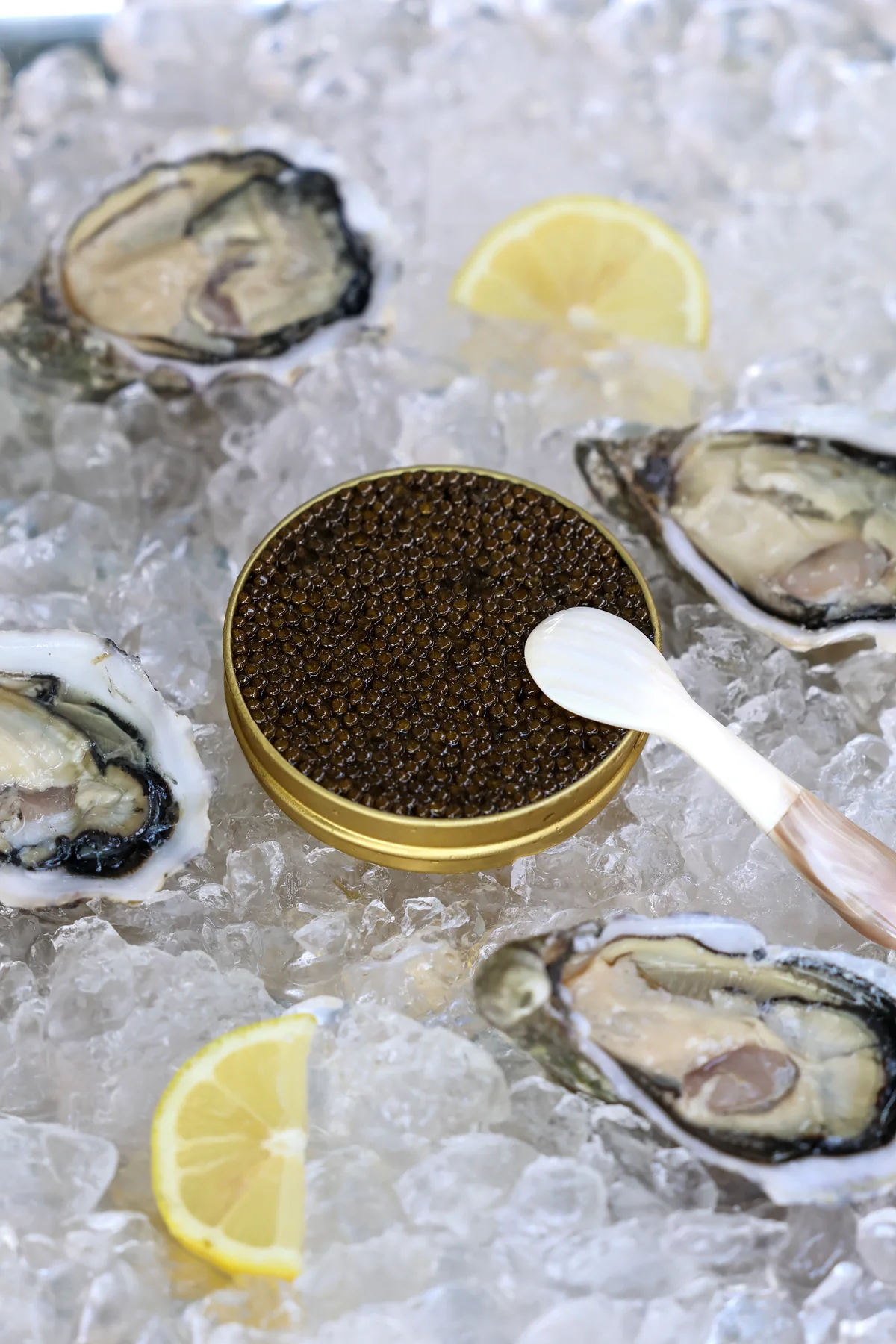
Read the tin's storage instructions and keep it refrigerated until serving. Have a cold support, a mother-of-pearl spoon or another non-reactive utensil, and some water ready. Open the tin when you are prepared to taste it. Try the first spoonful without blini, cream or sauce, so an accompaniment does not make up your mind about the caviar's flavour.
There is no need to serve a large amount. A small portion lets you taste again and see whether your impression changes. If you have guests, offer everyone a similar amount and keep the caviar cold while each person takes a turn.
Begin with texture
Notice whether the pearls remain distinct, how much resistance they offer and how they yield when pressed gently against the palate. You might call them delicate, firm or yielding without treating those words as a universal grading system. Describe this tin, not an entire species. Visible pearl size alone cannot tell you exactly how it will feel; that becomes clear only when you taste it.
Then notice what lingers
Pause after swallowing. What arrived first? Did the sensation change? How long did the flavour remain? A short note —initial intensity, texture and finish— is more useful than trying to identify ten nuances in seconds. If you take another spoonful, give it time and see whether it confirms your first impression.
Temperature can also affect your perception of the product. Do not warm a tin in an attempt to make it more expressive: follow its instructions and serve the caviar cold. If you later add a simple base, compare that second impression with your first rather than treating it as a new tasting.
Make your notes useful
Keep three words of your own, not a score. Next time, you can ask for something similar or deliberately seek a different texture. A shared tasting is more revealing when everyone describes what they noticed before hearing the others. That creates a conversation without imposing a correct answer. The pleasure lies in noticing differences, not in passing a technical test.