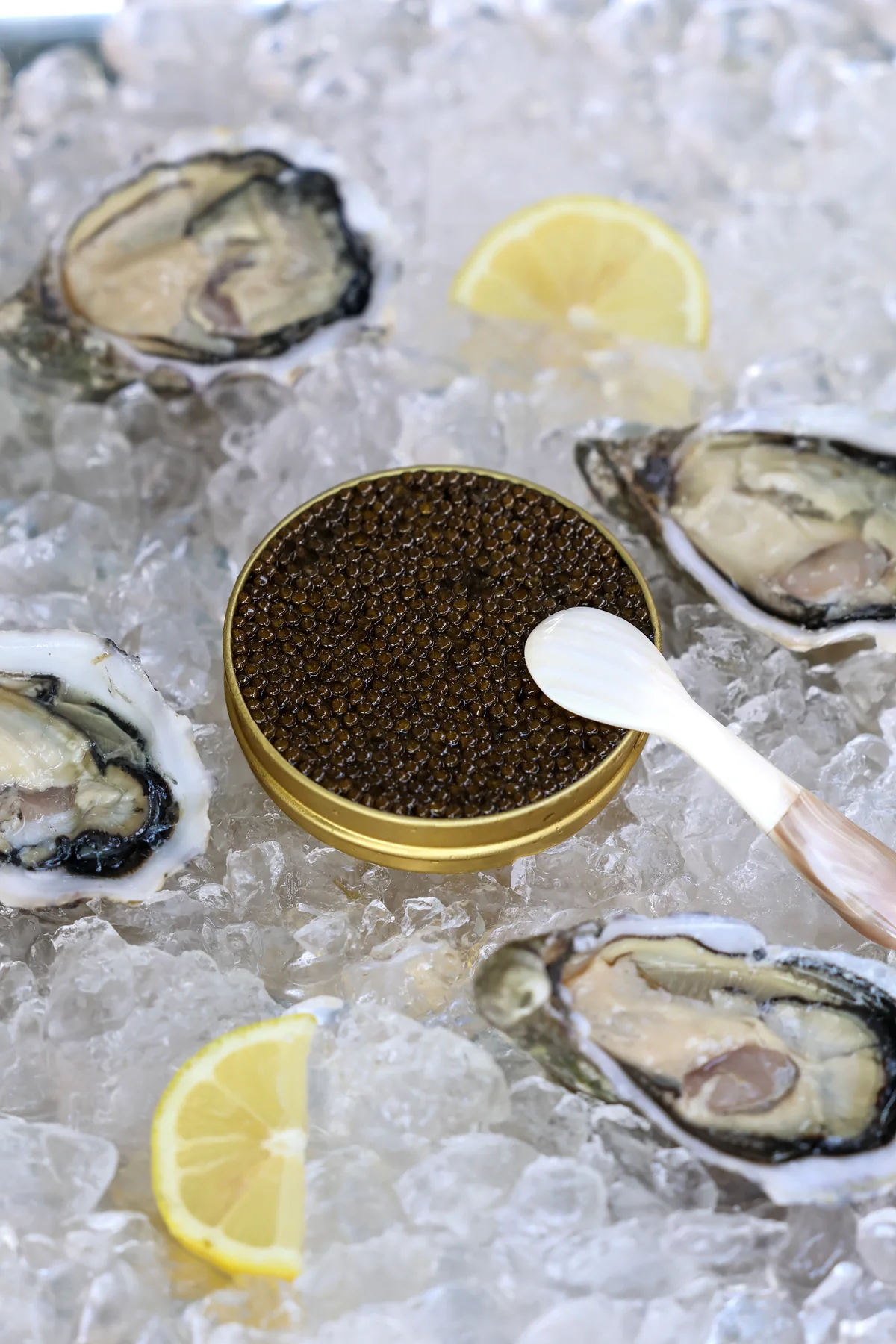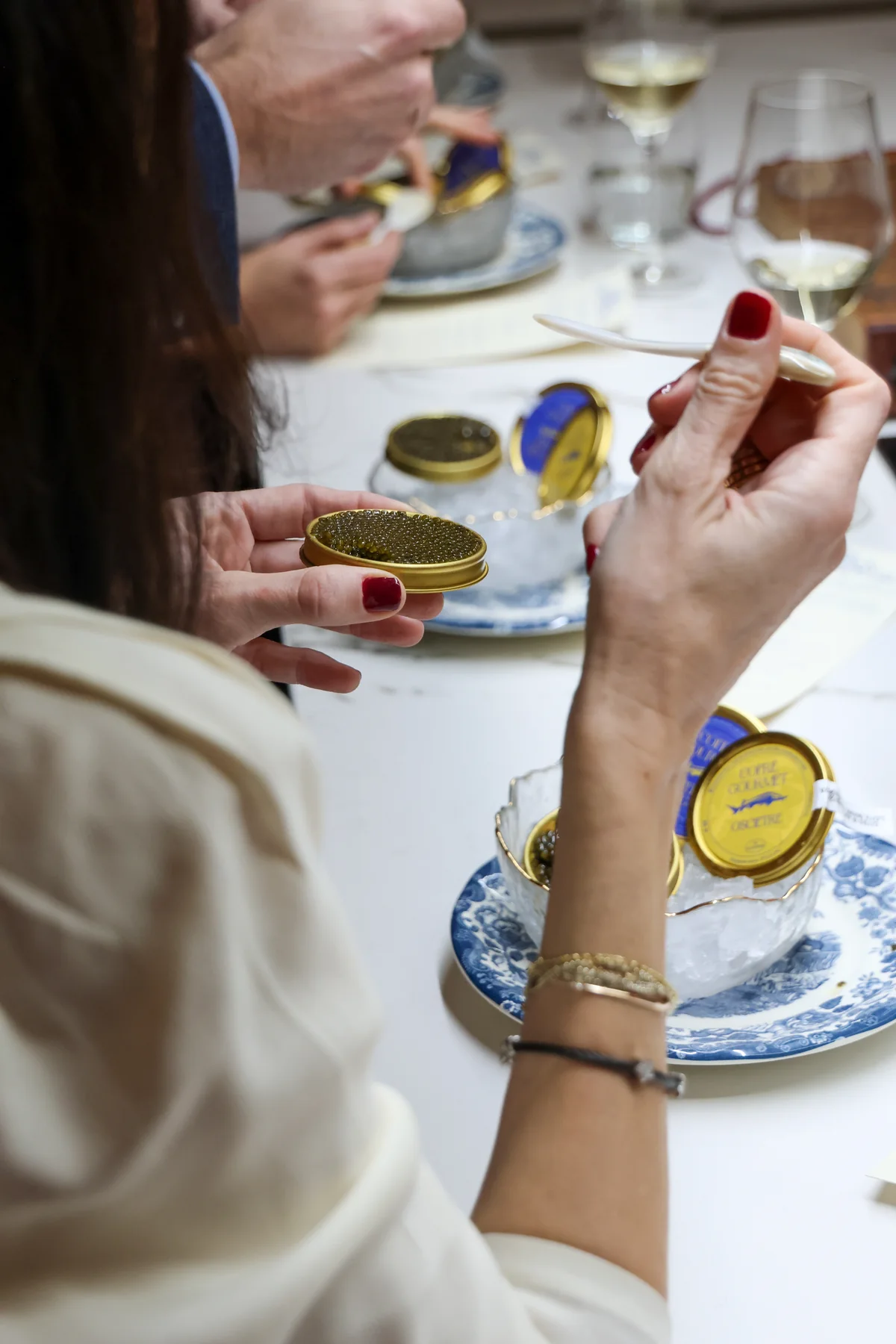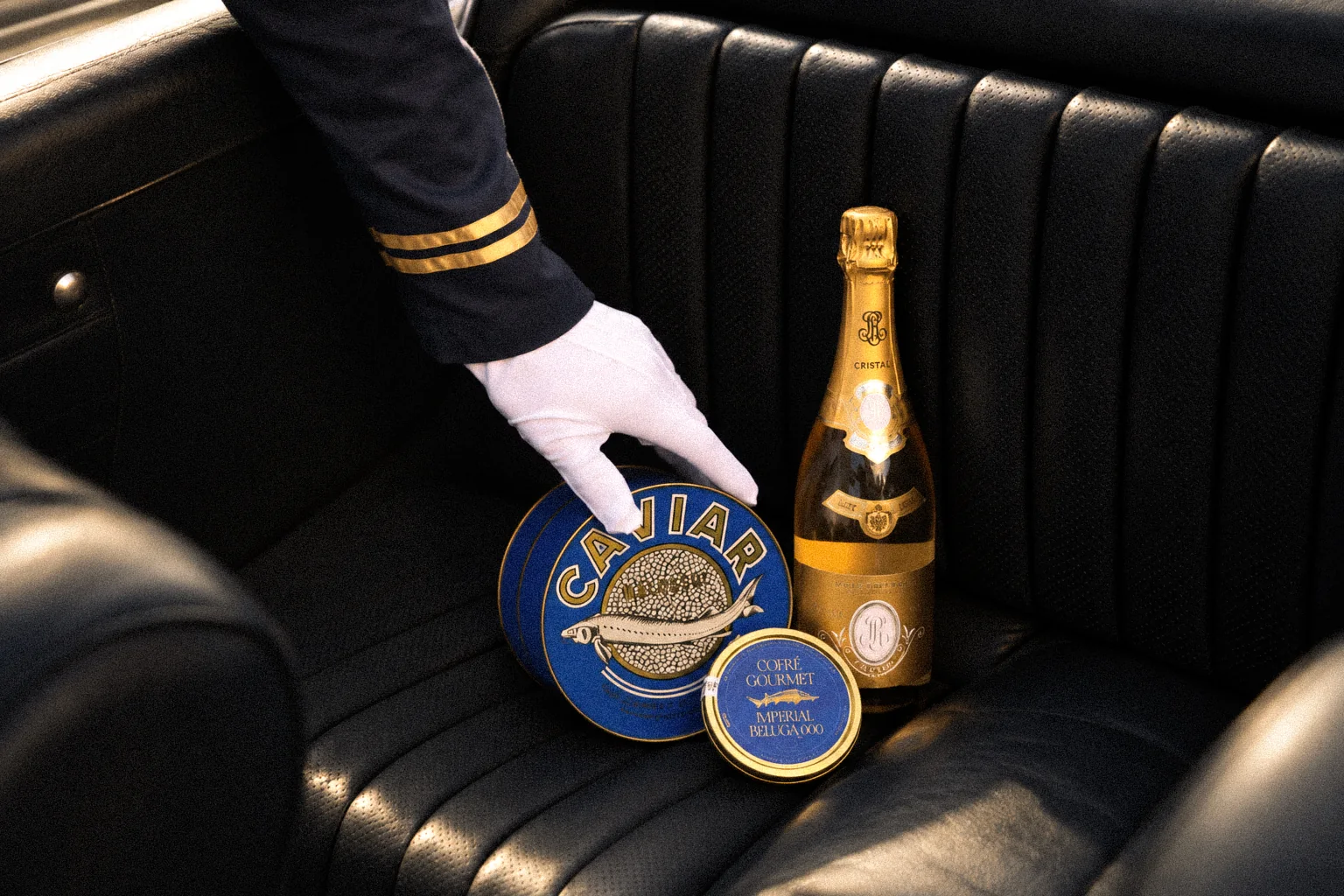
A drink can accompany caviar without telling you what the caviar ought to taste like. Before choosing a bottle, try a small spoonful on its own and drink some water. That reference makes it easier to notice what changes when you alternate a sip and another bite. Pairing becomes an enjoyable comparison at the table, rather than a rule of etiquette.
Start with water
Serve fresh water in a separate glass. Between tastings, a simple sip lets you return to the caviar without adding new aromas. If you are trying several drinks, have a small spoon for each round or use clean utensils. Prepare similar portions: comparing a generous spoonful with a tiny one can make the drink seem to have changed more than you really noticed.
Sparkling and still wine: two trials, not a ranking
If you feel like sparkling wine, choose one you already enjoy and serve it as part of the meal. Take a sip first, followed by a little caviar; reverse the order next time. You can make the same test with a white wine. Notice whether the finish invites another bite, whether the savoury note seems more or less prominent to you and which sequence you prefer. No single bottle can settle every palate and every menu.
There is no need to set out five glasses if all you want is to share a small tin. Two options, plus water, make for a clear comparison without using up the caviar or turning dinner into an exam. Anyone who does not drink alcohol can enjoy the whole tasting with water; there is no obligation to find something that imitates wine.
A table you could happily set again
Have the glasses ready before the caviar comes out. Keep the tin as its label directs and serve small portions for each round. If you are having blinis or potato too, try caviar with the drink before adding that base. Afterwards, you will know what the food contributes alongside the glass. If you want to take a note, make it specific — ‘I preferred it with water’ or ‘I liked the second sip better’ — and let the rest be conversation.